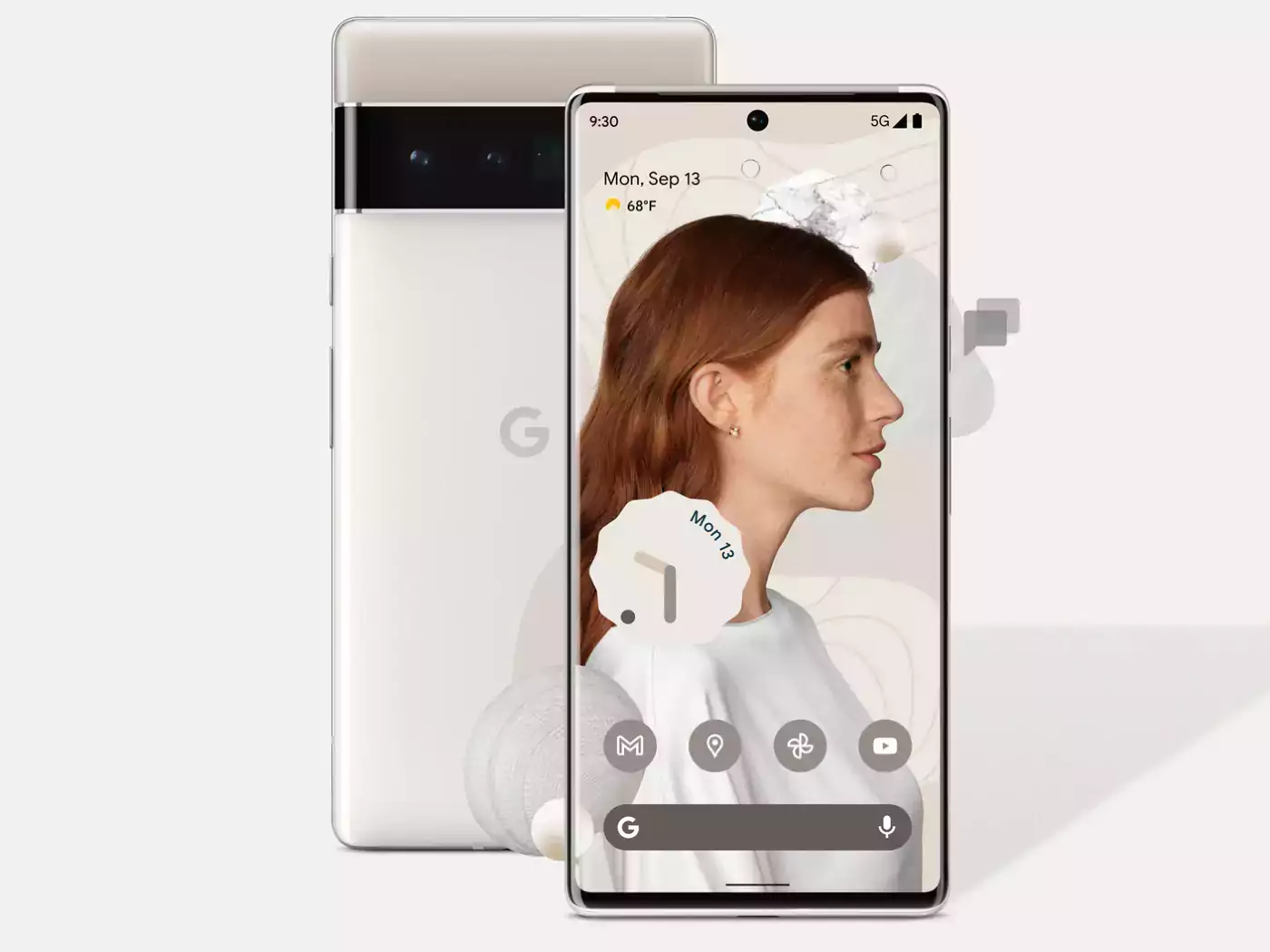

Google has launched the next handsets in its Pixel range, the Google Pixel 6 and Pixel 6 Pro, with the main feature being the Google Tensor SoC, which is Google’s first main SoC in a smartphone.
Most mobile ARM chip designs have “big,” “medium,” and “small” CPU cores; this year, that has typically meant one Cortex-X1 core, three Cortex-A78 cores, and four Cortex-A55 cores. The Google Tensor’s design has two big X1 cores, two A76 cores, and four A55 cores.
Google says that while this should be a “perfectly competitive” chip, the company is aiming for sustained performance for more medium workloads.
Those “medium” CPU workloads refer to AI work, which frequently has Google lighting up the whole chip to perform tasks like the new “HDR Net” video processing. Google’s camera software, called “HDR+,” kept the older Pixel image sensors competitive for so long because of image stacking, which takes 10 pictures at once and merges them all together.
Thanks to Google Tensor, the company can now run a version of the HDR image stacking on video, even on every frame of 4K, 60 fps video, which should finally bring Pixel video quality up to Pixel still-image quality.
With a flat 6.4-inch 90Hz OLED display built from Gorilla Glass, Google says that the Pixel 6 offers up to 2x better scratch resistance than previous Pixel phones. Its IP68 protection means it can withstand dust and be submerged in 1.5m of water for up to 30 minutes.
The premium Pixel 6 Pro has a 6.7-inch Smooth Display with a 120 Hz refresh rate and LTPO technology that can lower it to 10 Hz to save battery life. That higher rate should mean better rendering during fast-moving content like gaming.
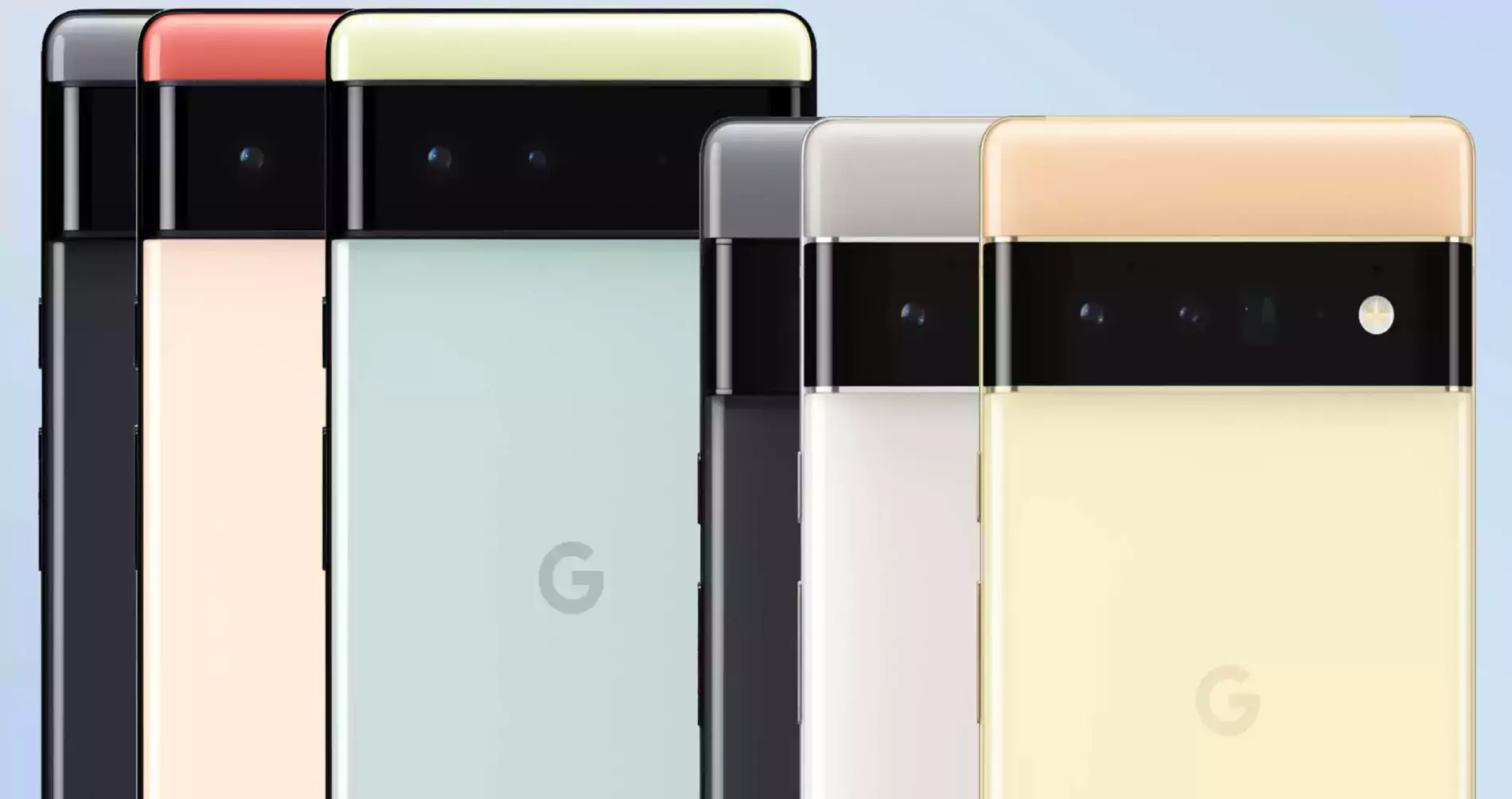
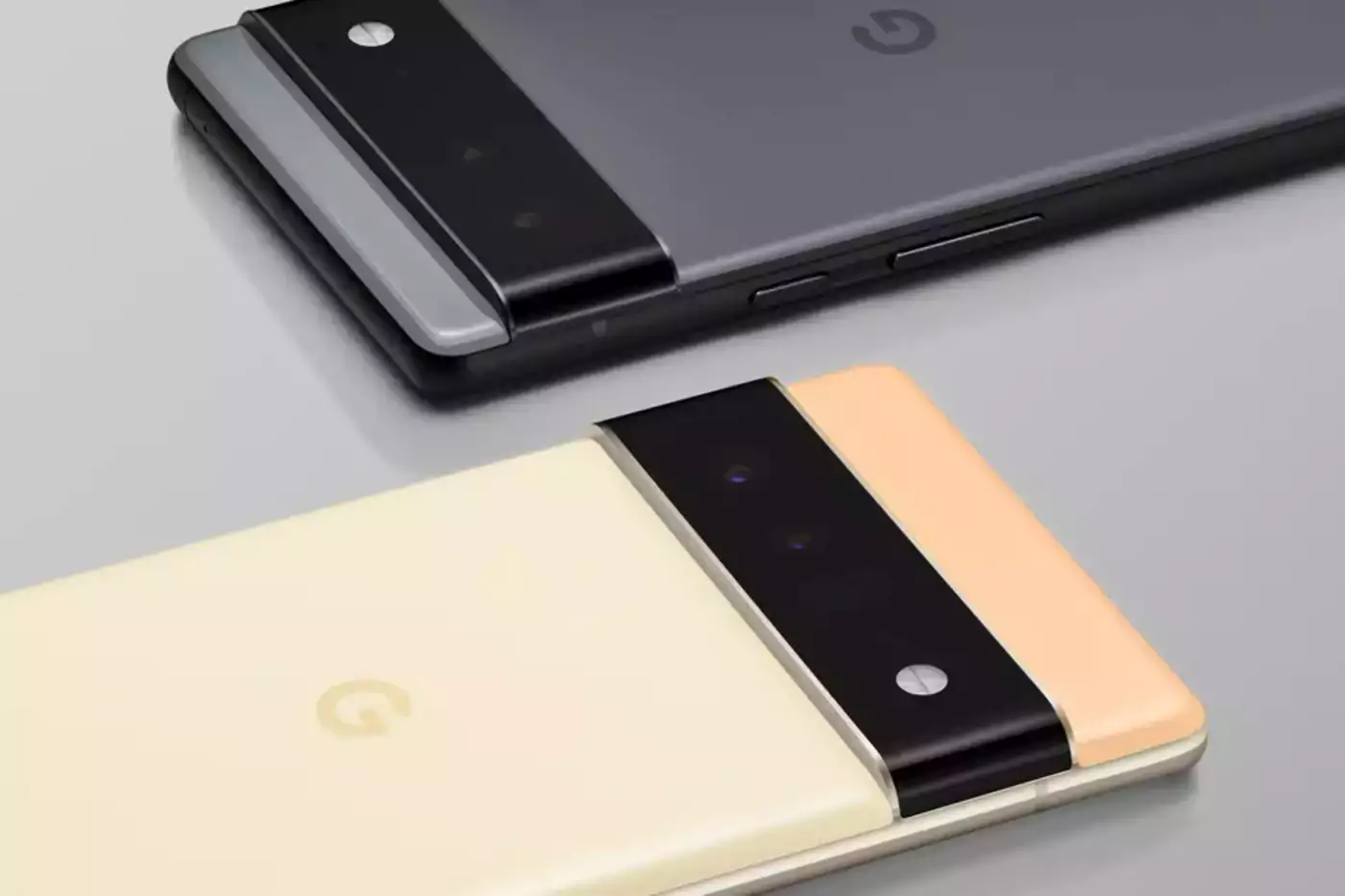
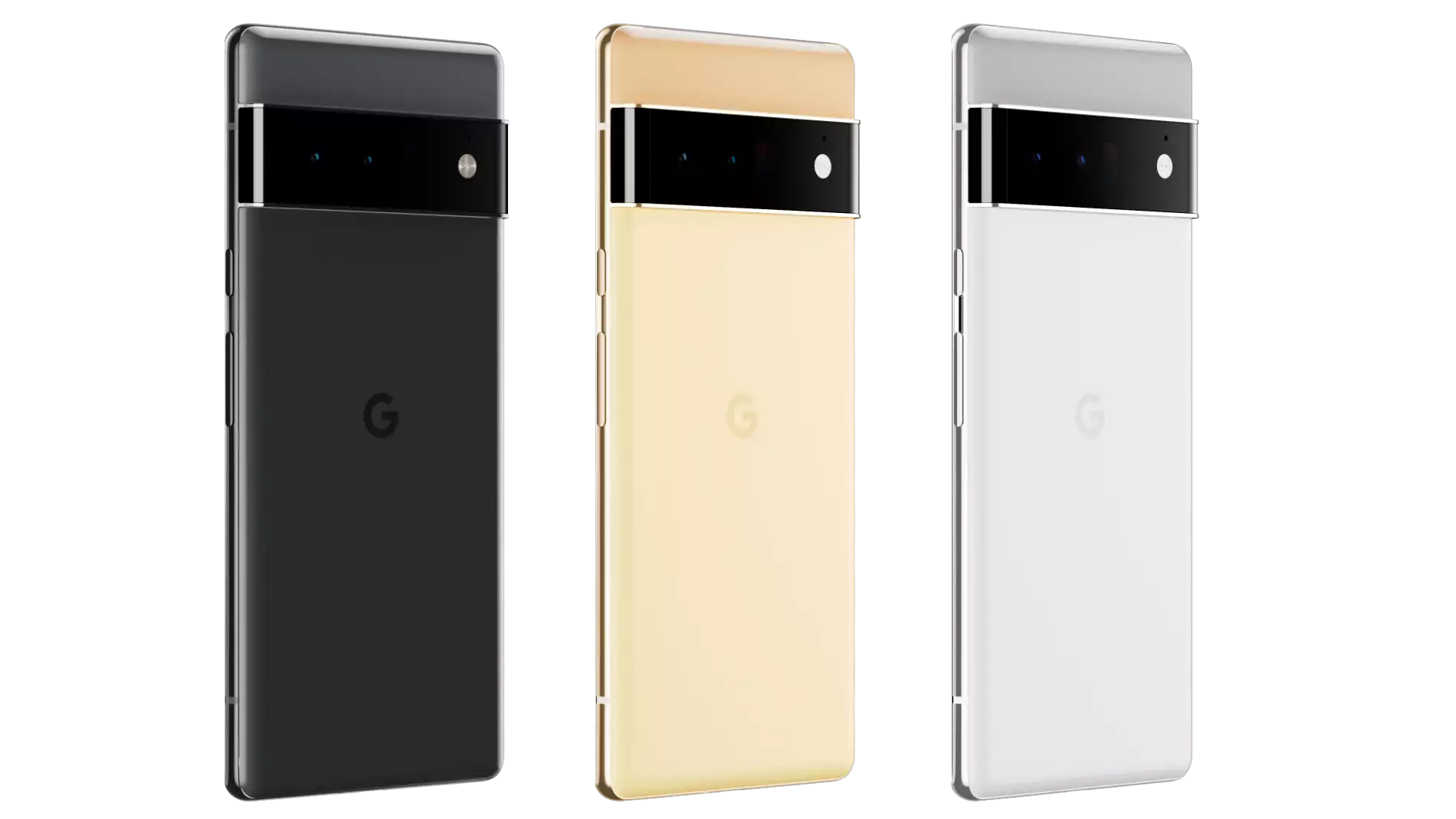
The Pixel 6 comes in three new colours: sorta seafoam, kinda coral and stormy black, while the 6 Pro is available in: cloudy white, sorta sunny and stormy black. But the most notable feature of the design of both handsets is the addition of the new camera bar – a horizontal black rectangle that spans the width of the phone’s back that Google claims is necessary to house the new camera lenses and sensors.
The Pixel 6 and Pixel 6 Pro’s main cameras have 50-megapixel wide lenses and a 1/1.3 inch sensor, which Google says captures 2.5 x more light than the Pixel 5. Both phones also have new 12-megapixel ultrawide cameras with a 114-degree field of view. The Pixel 6 Pro has an additional 48-megapixel telephoto lens with a 1/2-inch image sensor and 4x optical zoom. For taking selfies, the Pixel 6’s front-facing camera is 8-megapixels with an 84-degree field of view, and the 6 Pro is 11.1 megapixels and 94-degrees.
There’s new software to improve your images, including an updated portrait mode that Google says will more accurately represent diverse skin tones with a feature called ‘Real Tone’; ‘Face Unblur’ that takes additional images with the phone’s second camera and combines with the original to sharpen facial features blurred because of movement and ‘Motion Mode’ designed to capture action shots and long exposures creating a sense of speed.
The new Pixels also feature Google’s long-rumoured ‘Magic Eraser’ technology added into Google Photos, which the company claims will cleanly remove unwanted objects and photo bombers from photos both new and old.
Google claims that the new chip ensures a minimum of five years of software support, making them more attractive to increasingly sustainability-minded consumers, a sentiment that is carried over to the translucent casing designed with over 30% recycled plastics.
Elsewhere there are new materials used. According to Google, the Pixel 6 Pro has a light polished aluminium frame, and the standard Pixel 6 has a matte aluminium finish. This is a change from the Pixel 5’s aluminium body covered by a thin skin of bio-resin plastic.
The phone’s interface also has a new look with ‘Material You’ UI that continually updates the appearance of your display to complement the colour of your chosen wallpaper. Google also says the Pixel 6 features an AI-powered feature called ‘Glance’, which automatically brings up apps and info that you might need, such as a boarding pass when you arrive at an airport.
Battery-wise the Pixel 6 has a 4614mAh cell, while the Pixel 6 Pro boasts a hefty 5003mAh power pack. Google says both devices should last 24 hours, but like the Pixel 5, the new handsets have ‘Extreme Battery Saver’ mode, which claims to extend battery life up to 48 hours. Both the new devices have Battery Share, too, so you can charge other compatible devices wirelessly.
The Pixel 6 is available with a 30W USB-C charger (sold separately) while the new Pixel Stand charging dock (also sold separately) is also available and is twice as powerful as the previous version.
The Pixel 6 is available for pre-order today, costing £599, while the new Pixel 6 Pro is priced £849.
Both will be available in stores from October 28th and if you pre-order from select retailers, Google will even throw in a free pair of Bose Noise Cancelling Headphones 700.
Google Pixel 6 and Pixel 6 PRO Specs
| PIXEL 6 | PIXEL 6 PRO | |
|---|---|---|
| SCREEN | 6.4-inch, 90 Hz, 2400×1080 OLED | 6.7-inch, 120 Hz, 3120×1440 LTPO OLED |
| OS | Android 12 | Android 12 |
| CPU | Google TensorTwo 2.8 GHz Cortex-X1 cores Two 2.25 GHz Cortex-A76 cores Four 1.8 GHz Cortex-A55 Cores 5 nm | Google TensorTwo 2.8 GHz Cortex-X1 cores Two 2.25 GHz Cortex-A76 cores Four 1.8 GHz Cortex-A55 Cores 5 nm |
| GPU | ARM Mali G78 MP20 | ARM Mali G78 MP20 |
| RAM | 8GB | 12GB |
| STORAGE | 128GB/256GB UFS 3.1 | 128GB/256GB/512GB UFS 3.1 |
| BATTERY | 4600 mAh | 5000 mAh |
| NETWORKING | Wi-Fi 6E, Bluetooth 5.2, GPS NFC, 5G mmWave (optional) & Sub-6 GHz | Wi-Fi 6E, Bluetooth 5.2, GPS NFC, 5G mmWave & Sub-6 GHz UWB |
| PORTS | USB Type-C 3.1 Gen 1 with 30W USB-PD 3.0 charging | USB Type-C 3.1 Gen 1 with 30W USB-PD 3.0 charging |
| REAR CAMERA | 50 MP Main 12 MP Wide Angle Laser autofocus OIS spectral and flicker sensor | 50 MP Main 12 MP Wide Angle 48 MP 4x Telephoto Laser autofocus, OIS spectral and flicker sensor |
| FRONT CAMERA | 8 MP | 11 MP |
| SIZE | 158.6×74.8×8.9 mm | 163.9×75.9×8.9 mm |
| WEIGHT | 207 g | 210 g |
| MISC | IP68 dust and water resistance eSIM wireless charging in-screen fingerprint reader | IP68 dust and water resistance eSIM wireless charging in-screen fingerprint reader |
| STARTING PRICE | £599 | £899 |